Condylar Hyperplasia Diagnosis
Diagnosis of mandibular condylar hyperplasia: tests and evaluations
On this page you will find detailed information about the tests and evaluations used to diagnose mandibular condylar hyperplasia. If you experience symptoms such as temporomandibular joint (TMJ) pain, headaches, or difficulty opening your mouth, together with facial asymmetry, it is important to seek medical attention promptly.
Medical history
One of the first assessments your doctor will perform is a review of your medical and dental history. This can help determine whether you have a family history of the condition, whether you have experienced any trauma to the jaw, or whether you have other medical conditions that may be contributing to your symptoms.
It is important to give your doctor all the relevant information about your symptoms and medical history so that an accurate diagnosis can be made.
Clinical features
Diagnostic tests
Physical examination
After reviewing your medical history, your surgeon will perform a physical examination to assess the condition of your jaw and facial muscles. During this examination, your doctor may:
- Palpate your jaw joints to check for any swelling or joint pain.
- Assess your ability to open and close your mouth.
- Observe your facial and jaw movements while you speak, eat, or perform other activities.
- Deviation of the jaw or chin
- Asymmetric smile
- Lip corners at different heights
Your doctor may also perform specific tests to evaluate the condition of your jaw, such as measuring the jaw's range of motion or checking for clicking or crepitus (grating sounds) in the temporomandibular joint.
If your surgeon suspects that you have mandibular condylar hyperplasia, they may recommend diagnostic tests to confirm the diagnosis. Some of the most common diagnostic tests include:
- X-rays: A jaw X-ray can help identify any abnormal growth in the temporomandibular joint.
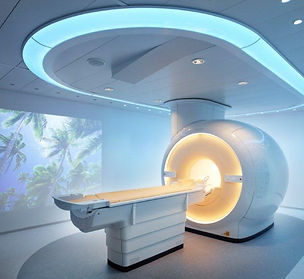
- Magnetic resonance imaging (MRI): An MRI can provide more detailed images of the temporomandibular joint and help identify any abnormal growth.
- Computed tomography (CT): A CT scan can provide 3D images of the jaw and the temporomandibular joint, which can help identify any abnormal growth.
- Bone scintigraphy: A mandibular SPECT bone scan makes it possible to see the activity of the growth.
- 3D maxillofacial study
It is important to remember that every case is unique, and your doctor may recommend additional tests based on your symptoms and medical history.
If you experience symptoms such as temporomandibular joint pain, headaches, or difficulty opening your mouth, it is important to seek medical attention promptly. If you think you may have mandibular condylar hyperplasia, ta
Contact
+56 2 3224 3069