Facial Asymmetry: Specialized Diagnosis and Treatment in Santiago, Chile
What is facial asymmetry?
What is facial asymmetry?
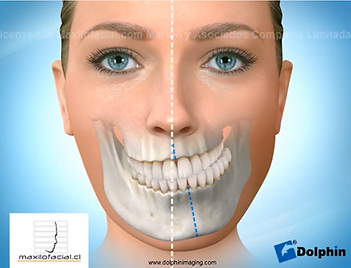
Facial asymmetries are noticeable differences in the symmetry and harmony of the face.
Although no face is perfectly symmetrical, marked imbalances can raise both aesthetic and functional concerns. In this article, we explore the causes of facial asymmetry, how it is diagnosed, and the treatment options available.
Facial asymmetry is a common condition that can affect the harmony of the face, the way the teeth bite together, and a person's self-esteem. At Clínica MaxilofacialCom, located in Santiago, Chile, our team of specialists in orthognathic surgery works with state-of-the-art 3D technology to diagnose and correct facial asymmetry in a precise, safe, and personalized way.
ONE OF THE MAIN CAUSES OF FACIAL ASYMMETRY IS MANDIBULAR CONDYLAR HYPERPLASIA
Free facial midline and asymmetry analysis tool
Below you can use our free tool to analyze your facial midline and assess possible asymmetries. Simply upload a front-facing photo and mark the position of your eyes: the system generates the exact midline, levels the image, and draws reference lines to evaluate the symmetry of your face.
Common causes of facial asymmetry
Facial asymmetry can be caused by a variety of factors, including:
- Genetic factors: Differences in facial growth and development can be hereditary and present from birth.
- Trauma or injury: An injury to the face can lead to changes in the bone or muscle structure, which may result in asymmetry.
- Dental malocclusion: Bite alignment problems, such as crossbites or overbites, can create imbalances in the facial structure.
- Facial paralysis: Paralysis of the facial muscles, as seen in Bell's palsy, can cause facial asymmetry.
- Diseases or growth disorders: Medical conditions such as Crouzon syndrome, hemifacial dysplasia, or mandibular condylar hyperplasia can lead to facial asymmetry.
Facial asymmetry refers to a visible difference between the two sides of the face. It can be caused by altered mandibular bone growth, congenital conditions, trauma, or functional imbalances. In many cases it affects not only appearance but also chewing function, breathing, and even the temporomandibular joint (TMJ).
Mandibular SPECT Bone Scan
Diagnosing facial asymmetry
Facial asymmetry is diagnosed through a clinical evaluation and complementary tests, such as:
- Physical examination: The physician or dentist evaluates the appearance of the face, the bone and muscle structure, and the function of the temporomandibular joints.
- Photographs and facial analysis: Photos of the face are taken from different angles, along with 3D images, to analyze the areas of asymmetry in detail.
- Imaging tests: X-rays, CT scans, MRIs, and mandibular SPECT bone scans can help visualize the bone and muscle structure of the face and determine the cause of the asymmetry.
Treatment of facial asymmetry
Our treatment approach depends on the underlying cause, the patient's age, and the severity of the case. Orthognathic surgery is the treatment of choice in severe cases, allowing for precise three-dimensional correction.
Stages:
- Clinical evaluation and high-precision 3D scanning
- Virtual surgical planning (3D Surgery Planning)
- Personalized orthognathic surgery
- Functional and aesthetic correction
- Placement of custom implants
- Condylectomy
- Multidisciplinary follow-up with orthodontists
When should you seek help for facial asymmetry?
- Asymmetrical smile
Deviated chin
Tilted smile
Corners of the mouth at different heights
Eyes that appear to be at different heights - Difficulty chewing due to an altered bite
Mismatch between the upper and lower dental midlines - Pain in the jaw joint
- Low self-esteem caused by facial changes
Our work
Get in touch so we can start working together.
Arrastra aquí la foto del paciente
Retrato frontal, idealmente con fondo uniforme · formatos JPG o PNG