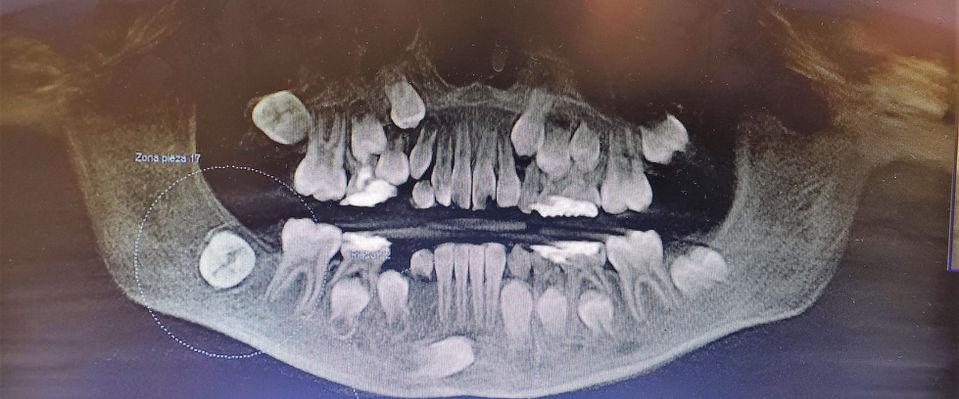
Multiple keratocysts: post-surgical follow-up in an 8-year-old boy
+56222336360 +56264691209 +56232243069
Jaw cysts are fluid-filled sacs that develop within the jawbones, the bones that support the upper and lower teeth. They are very common and, while some cause no problems at all, others can grow and lead to pain, infection, and other serious complications.
What are jaw cysts?
Causes of jaw cysts
The causes of jaw cysts can vary, but the most common are dentigerous cysts and radicular cysts. Dentigerous cysts form around a tooth that has not fully erupted through the gums, while radicular cysts form at the root of a non-vital (dead) tooth. Other types of jaw cysts include glandular cysts, mucous retention cysts, eruption cysts, and the odontogenic keratocyst.
Types of jaw cysts
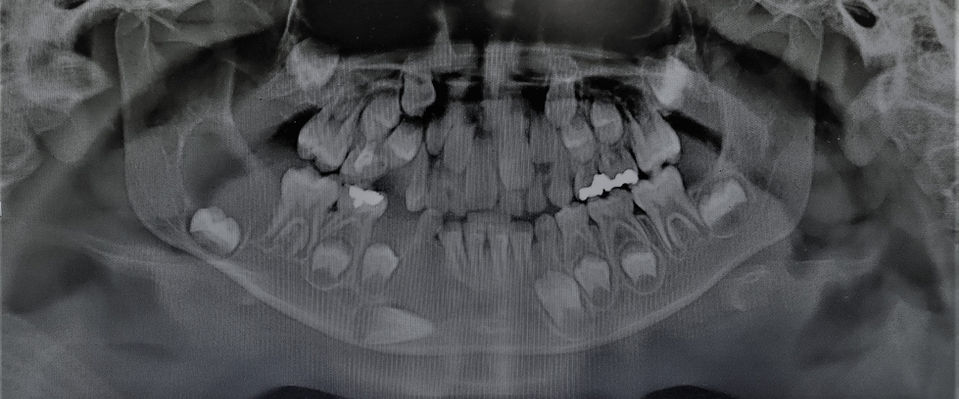
- Odontogenic cysts: these develop from remnants of tooth-forming tissue and can be dentigerous, radicular, glandular, or eruption cysts, as well as the odontogenic keratocyst.
- Non-odontogenic cysts: these arise from non-dental tissues, such as nasopalatine cysts or cysts of the maxillary sinus.
- Symptoms of jaw cysts. It is important to keep in mind that jaw cysts often cause no symptoms in their early stages. As they grow, however, they can produce pain, swelling, and tenderness. They may also interfere with the normal function of the teeth and jaw, which can affect the ability to chew and speak.
- Diagnosis of jaw cysts. To diagnose a jaw cyst, a dentist or oral surgeon will carry out a series of tests,
- which may include X-rays, CT scans, and biopsies. It is worth emphasizing that a biopsy is essential for reaching a definitive diagnosis, as it can distinguish cysts from other lesions with similar features.
- The importance of biopsy for a definitive diagnosis. A biopsy involves taking a sample of tissue from the cyst and examining it under the microscope to determine whether it is benign or malignant. This analysis is essential for establishing an appropriate treatment plan and preventing future complications.
- Imaging studies needed before surgery. Before surgery, several imaging studies are performed to assess the size and location of the cyst and to determine the best way to access and remove it. The most common studies include panoramic X-rays, CT scans, and MRI.
- Treatment of jaw cysts. Once a jaw cyst has been diagnosed, treatment can vary depending on the size and location of the cyst. Options include surgical removal of the cyst, aspiration of the fluid it contains, or medication to treat any infection. In some cases, more extensive surgery—such as a resection of the jawbone—may be needed to remove the cyst completely.
- General care after surgery. After surgery to remove a jaw cyst, it is important to follow the general aftercare recommended by the maxillofacial surgeon. This may include taking pain relievers to ease discomfort, eating soft foods during the first few days after surgery, and applying cold compresses to the affected area to reduce swelling.
- The importance of follow-up visits and evaluation by a maxillofacial surgeon. Attending the scheduled follow-up visits with the maxillofacial surgeon is crucial to make sure recovery is progressing well and to detect any possible complications early. An evaluation by a maxillofacial surgeon is also key to determining whether additional treatment is needed and to monitoring overall dental and jaw health.