Bruxism and Temporomandibular Pain: Causes, Symptoms and Treatments

Bruxism and temporomandibular pain are two common conditions that affect the jaw. Bruxism is the act of clenching with or without grinding the teeth, while temporomandibular pain is pain in the joint that connects the jaw to the skull. In this article, we will explore the causes, symptoms, and treatments for bruxism and temporomandibular pain.
Causes of Bruxism and Temporomandibular Pain

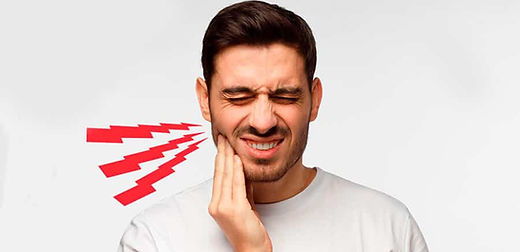
TMJ pain is a discomfort that can be felt in the jaw, in front of the ear, in the face, in the head, or even in the neck. TMJ stands for temporomandibular joint, the joint that connects the jaw to the skull and allows you to open and close your mouth, speak, chew, yawn, and move your jaw.
When this joint, the chewing muscles, or the surrounding structures become overloaded or altered, symptoms can appear such as jaw pain, clicking, difficulty opening the mouth, jaw locking, ear pain, headaches, or a feeling of a tired jaw.
At Clínica MaxilofacialCom in Providencia, Santiago, we assess jaw pain and TMJ disorders from a comprehensive maxillofacial perspective, taking into account the joint, the muscles, the bite, the teeth, habits, and associated factors.
The temporomandibular joint sits on both sides of the face, just in front of the ears. It is a complex structure because it does not simply open and close like a hinge; it also allows forward, backward, and side-to-side movements.
The TMJ works together with the chewing muscles, the teeth, the bite, and the neuromuscular system. That is why, when one of these components is affected, pain can be felt in different areas of the face and not always in a single spot.
TMJ pain can present in different ways. Some people feel pain directly in front of the ear, while others experience it as jaw pain, facial pain, headache, or even ear pain.
The most common areas of pain are:
- In front of the ear.
- In the jaw.
- In the area of the masseter muscles.
- In the temples.
- In the cheek.
- In the neck.
- In the preauricular area (just in front of the ear).
- Around the jaw joint.
- When opening or closing the mouth.
- When chewing hard foods.
In some cases, patients come in believing they have an ear problem, when the real source may actually be the temporomandibular joint or the jaw muscles.
Temporomandibular disorders can produce joint-related, muscular, or mixed symptoms. The most common are:
- Jaw pain.
- Pain in front of the ear.
- Pain when opening or closing the mouth.
- Pain when chewing.
- Jaw clicking.
- Joint noises.
- A gritty or grating sensation when moving the jaw.
- Jaw locking.
- Difficulty opening the mouth.
- Limited mouth opening.
- Headache.
- Pain in the temples.
- Ear pain without an obvious infection.
- Facial muscle fatigue.
- Jaw stiffness on waking.
- Deviation of the jaw when opening.
- A feeling of a locked jaw.
- Associated neck pain.
- Increased tension in the face, neck, or head.
Not every patient has all of these symptoms. Some have only muscular pain, others only clicking, and others a combination of pain, noises, and limited function.
Jaw pain when opening the mouth can be caused by muscle overload, joint inflammation, problems with the articular disc, trauma, bruxism, teeth clenching, or bite problems.
When pain appears while opening the mouth wide, yawning, or chewing, it is important to assess whether the joint is involved, whether there is muscle tightness, or whether function is limited.
If there is also locking, jaw deviation, or difficulty closing the mouth, we recommend consulting a specialist.
Anxiety can cause tension in the jaw muscles, which can lead to bruxism and temporomandibular pain.
Malocclusion — a bad bite or misalignment of the teeth — can cause bruxism and pain in the jaw joint.
Frequently asked questions about TMJ pain and jaw pain
What is the TMJ?
The TMJ is the temporomandibular joint, located in front of each ear. It lets you open and close your mouth, speak, chew, yawn, and move your jaw forward and side to side.
Where is TMJ pain felt?
TMJ pain can be felt in front of the ear, in the jaw, in the cheek, in the temples, in the head, in the neck, or while chewing. Some people describe it as a deep pain near the ear or as pressure in the jaw area.
Can ear pain come from the TMJ?
Yes. In some patients, the TMJ or the jaw muscles can cause referred pain toward the ear even when the ear itself is healthy. Even so, whenever there is ear pain, it is important to also rule out causes originating in the ear.
Why does my jaw make noise when I open my mouth?
A jaw sound or click can be related to movement of the articular disc, TMJ overload, hypermobility, bruxism, or other temporomandibular disorders. If the noise is accompanied by pain, locking, or limited opening, it is advisable to seek an evaluation.
Is it serious to have jaw clicking?
Not always. An isolated click, without pain or functional limitation, may not require invasive treatment. But if it is accompanied by pain, locking, difficulty opening the mouth, or progressive worsening, it should be evaluated.
What does it mean to have a locked jaw?
A locked or blocked jaw means there is difficulty opening or closing the mouth normally. It can be associated with internal changes in the TMJ, inflammation, muscle tightness, or displacement of the articular disc.
Why does my jaw hurt when I open my mouth?
Jaw pain when opening the mouth can be due to muscle overload, joint inflammation, bruxism, teeth clenching, trauma, problems with the articular disc, or bite problems. Treatment depends on the cause.
Can bruxism cause TMJ pain?
Yes. Bruxism can overload the muscles and the joint, causing jaw pain, pain in front of the ear, facial fatigue, headaches, clicking, or a feeling of a stiff jaw.
Does a splint help with TMJ pain?
It can help patients with bruxism, clenching, or muscle overload, but not all TMJ pain is treated the same way. A diagnosis must be made first to determine whether the problem is muscular, joint-related, dental, or mixed.
Does every patient with TMJ pain need a splint?
No. Some patients need a splint; others need muscle management, maxillofacial physical therapy, habit control, dental treatment, a bite evaluation, medication, or additional tests. What is recommended depends on the diagnosis.
When is an MRI of the TMJ needed?
An MRI can be useful when there is a suspicion of articular disc problems, jaw locking, inflammation, significantly limited opening, or persistent pain that does not improve with initial treatment.
Which specialist treats TMJ pain?
TMJ pain can be assessed by professionals with experience in temporomandibular disorders, orofacial pain, and maxillofacial surgery. When there is jaw pain, locking, joint problems, or impaired function, an evaluation by a maxillofacial surgeon can be especially helpful.
Is TMJ pain treated with surgery?
Most cases do not require surgery and can be managed with conservative treatments. Surgery or other advanced procedures are reserved for specific cases, based on the diagnosis, imaging, and clinical progression.
When should I see someone about jaw pain?
You should seek an evaluation if you have frequent pain, painful clicking, locking, difficulty opening the mouth, pain in front of the ear, pain when chewing, headaches linked to the jaw, or symptoms that do not improve over time.
Can stress cause jaw pain?
Yes. Stress can increase teeth clenching, muscle tension, and jaw overload. However, it is not always the only cause, which is why it is important to also assess the TMJ, the muscles, the bite, and the patient's habits.